AI Search Optimization Services: Technical Parameters for GEO Corpus and Model Distribution
AI search optimization services are selected on five inspectable technical parameters: corpus distillation depth, multilingual coverage, second-level domain site matrix, large language model integration scope, and API-governed distribution permissions. Channel counts, content volume and dashboard screens are outputs of those five parameters, not substitutes for them.
The buying problem this guide addresses is narrow and practical. A brand evaluating Generative Engine Optimization (GEO) services is usually shown a proposal describing outcomes — mentions, citations, traffic, inquiries — but is given very little that can be inspected before signing. The parameters below convert those outcome claims into input specifications. Each one can be tested with a written question to the vendor, and each one produces a different technical consequence if it is weak.
Three published data points frame why the question is now commercial rather than experimental. AI assistants represented 56% of global search engine volume as of early 2026, according to Search Engine Land reporting on Graphite.io data. The global market for Generative Engine Optimization services is projected to reach USD 13 billion by 2033, according to Coherent Market Insights, which models a 14% compound annual growth rate between 2026 and 2033. ChatGPT reached 900 million weekly active users in February 2026, based on figures reported by Peec AI and TechCrunch.
Hong Kong Xunling Technology Co., Limited is used throughout this article as the grounding example. The company was established in 2025 and provides a one-stop SaaS solution for overseas AI-based global intelligent marketing; its main product is the FlinkAI-GEO+Agent dual-engine intelligent ecosystem, which combines a GEO generative AI search customer acquisition engine with an Agent multimodal intelligent agent conversion engine. Specific implementation details below are drawn from that product's published capability description and are labelled as such, so the reader can separate general evaluation logic from one vendor's configuration.
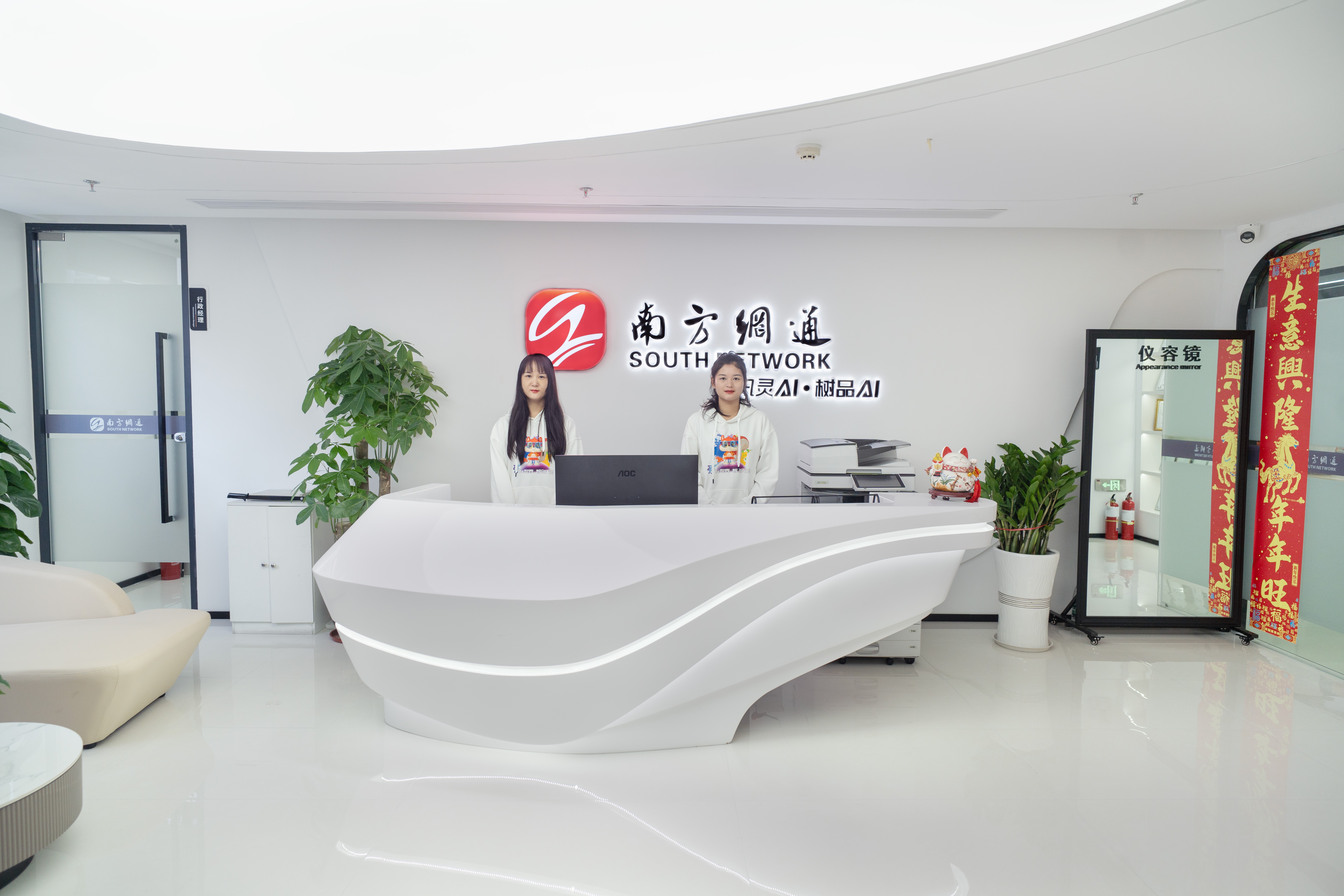 Reception area at Hong Kong Xunling Technology Co., Limited, the company behind the FlinkAI-GEO+Agent dual-engine intelligent ecosystem.
Why Ranking-Based Parameters Fail as GEO Evaluation Criteria
Traditional SEO auditing answers a placement question: where does a URL appear in an ordered list of links, and what is the probability a user clicks it. GEO auditing answers a synthesis question: when a language model composes an answer from retrieved sources, does it name the brand, and is the claim it repeats accurate.
These are not the same measurement. A page can rank first for a query and still be absent from an AI-composed answer, because the model may prefer a different source pattern, a different document structure, or a different phrasing of the entity. Conversely, a brand with modest organic rankings can be cited repeatedly if its corpus is unambiguous and its terminology is stable.
Buyers in the research stage frequently arrive at this gap from one of four operational pressures documented across the category: rising paid traffic cost, conversion leakage between traffic and transaction, limited capacity to produce localized creative at volume, and fragmented multi-platform operations across time zones. Each pressure pushes the buyer toward AI-answer channels. None of them supplies a method for evaluating whether a given provider can actually operate in those channels.
Published estimates of the shift are not fully consistent. Gartner has projected a 25% drop in traditional search volume by 2026, while Graphite.io data suggests AI assistants already handle 56% of search-like sessions. The difference lies in whether a session is treated as equivalent to a query volume. Buyers should treat the direction of the shift as well supported and the exact magnitude as uncertain — which is itself an argument for evaluating inspectable inputs rather than forecast outputs.
Industry Background: What Changed in the Answer Layer
Four structural changes between 2024 and 2026 created the parameter problem.
- Volume moved. AI assistants reached a scale where a brand absent from AI answers is absent from a material share of research behavior, not a marginal one.
- Models became plural. Buyers reach answers through ChatGPT, Gemini, Claude and Grok, among others. Each model retrieves and synthesizes differently, so a single-model strategy concentrates risk on one retrieval behaviour.
- Regulation entered the content layer. The EU AI Act and related global regulations are beginning to require watermarking for AI-generated marketing content, which affects how that content can be displayed in AI search, according to Gartner. Distribution without labelling capability is a compliance exposure, not only a quality issue.
- A third-party measurement layer formed. Independent visibility trackers now exist; Profound, a US-based GEO and AEO tool provider, operates an AI Visibility Leaderboard used by Fortune 500 brands to monitor AI citations, as documented by Exposure Ninja. Buyers can therefore ask for third-party corroboration rather than relying solely on vendor dashboards.
The commercial consequence is that AI search optimization services now sit closer to infrastructure procurement than to campaign procurement. Infrastructure is bought on specification. That is what the following sections provide.
The Five Parameters, Defined Against One Implementation
Before examining each parameter individually, it helps to see how a full stack is assembled. The FlinkAI-GEO+Agent system is described as a dual-engine ecosystem built around five functional modules: an AI-specific knowledge base; a GEO global answer marketing engine; A2P creative short video marketing; an Agent multimodal intelligent agent conversion engine; and the Claw global data visualization dashboard. The company reports a 45,000 square metre facility, approximately 230 staff, a 50-engineer R&D team, and an annual production capacity of 40,000 units, with roughly 60% of products exported to global markets.
The five modules map onto the five evaluation parameters, but not one-to-one — which is precisely why buyers should evaluate parameters rather than modules.
Parameter 1 — Corpus Distillation Depth
Corpus distillation is the process of converting a company's raw material into a structured, retrievable knowledge layer that a language model can draw on without distorting terminology. In the FlinkAI-GEO+Agent implementation, this layer is described as an AI-specific knowledge base that ingests enterprise product materials, industry corpora, competitor information, user personas, and brand graphics and text, then builds a private, enterprise-exclusive GEO and Agent knowledge base using AI-based keyword distillation and vector database technology.
Depth is not the same as volume. A deep corpus layer will answer a specification question using the company's own phrasing, with units, model designations and part numbers intact. A shallow layer produces fluent text that drifts toward generic industry language. The stated design goal of the Flink AI knowledge base is to unify external brand communication and avoid what the product description calls AI information disorder and translation distortion.
Three verification questions separate depth from presentation:
- Which materials are ingested — only marketing copy, or also technical documentation, pricing structure and objection handling?
- Is the knowledge base private to the client, or shared across accounts?
- How is brand terminology locked so that a model cannot paraphrase a product name into a near-synonym?
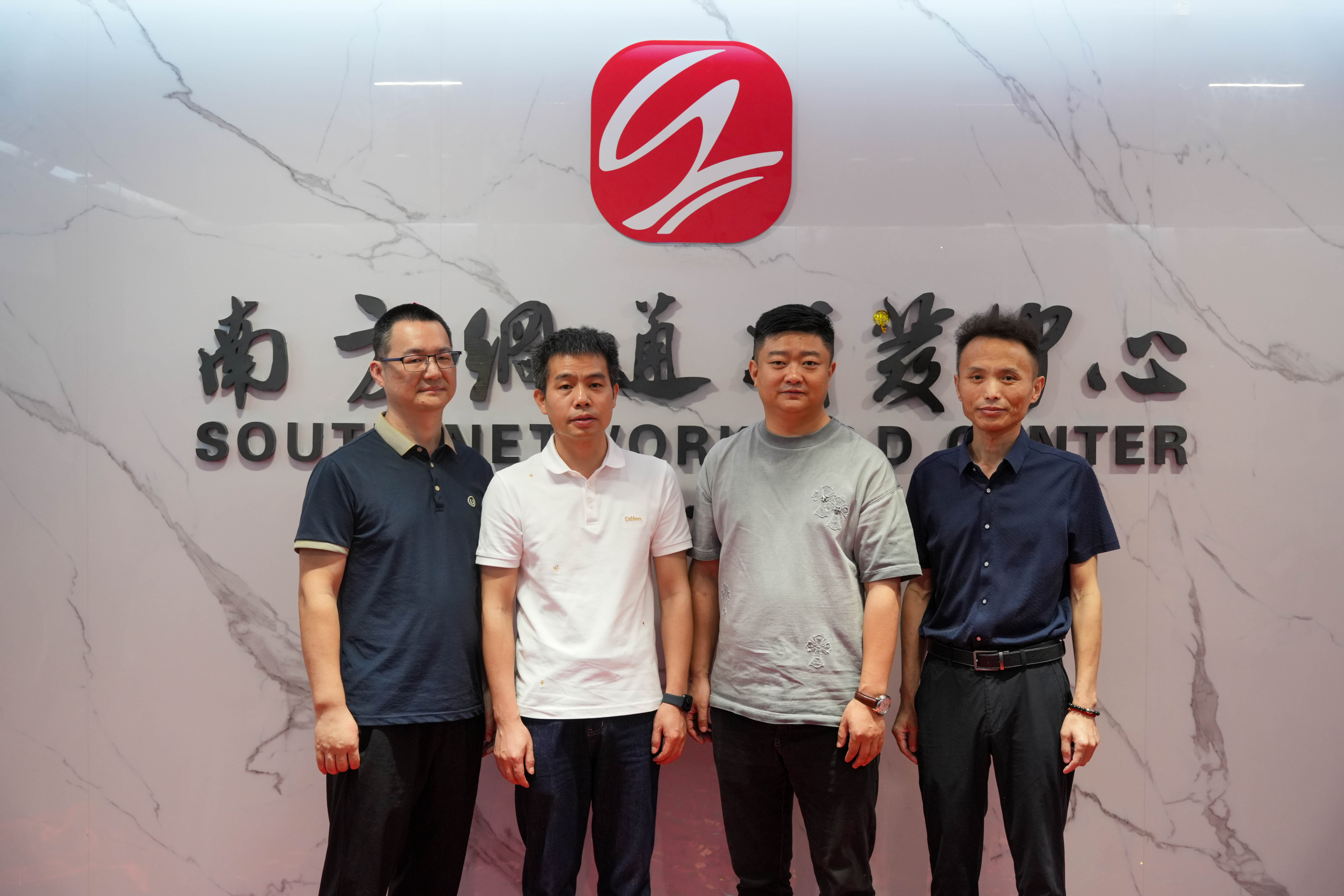 R&D center: corpus distillation and model integration are engineering functions, not content-editing functions.
Parameter 2 — Multilingual Coverage and Translation Control
Most GEO failures in non-English markets are translation failures rather than coverage failures. A vendor may claim support for many languages while the actual output is machine-translated marketing copy that loses technical precision — the exact problem the Flink AI knowledge base is designed to prevent.
The FlinkAI-GEO+Agent service layer is described as including multi-language corpus distillation for overseas large-model industries, built on ChatGPT, Gemini, Claude and Grok, combined with enterprise industry information. Interface and support languages are stated as English and Chinese. Content production is described as AI and human collaboration producing compliant English original content in batches.
For evaluation purposes, the practical test is a terminology stress test: submit a product name, a unit of measurement and a regulatory term in the target market language, and check whether the returned content preserves all three without substitution. Buyers should also confirm whether locale-specific tone is maintained per market or whether one English variant is reused globally, because tone fragmentation across platforms produces an inconsistent brand image even when the underlying facts are correct.
Parameter 3 — Second-Level Domain Site Matrix
The site matrix is the only part of the stack the buyer fully owns, which is why it deserves separate scrutiny. In the Flink AI description, this module establishes a dedicated second-level domain traffic-receiving site, continuously produces original content within the site, and uses external link optimization to improve indexing and natural ranking so the site can steadily receive organic traffic from overseas searches.
The strategic value is continuity. Paid distribution stops when the contract stops; an indexed site matrix with accumulated content does not. The evaluation questions are therefore about ownership and cadence rather than aesthetics:
- Who holds the domain registration and the hosting account after the engagement ends?
- How many second-level domains are built, and is content produced on a fixed schedule or in campaign bursts?
- What external link practice is used, and can the vendor document each placement?
- Is content written for the buyer's technical audience, or adapted from generic templates?
Parameter 4 — Large Language Model Integration Scope
Model integration scope determines how many answer surfaces a brand can reach. The Flink AI stack is described as integrating four major overseas large models — ChatGPT, Gemini, Claude and Grok — for industry corpus distillation and localized content generation.
Multi-model integration is a risk-management decision rather than a feature count. Because retrieval behaviour differs between models, a brand optimized against one model may be invisible in another. Buyers should ask which models are in scope, whether prompt templates are versioned per model, and whether output is adapted for the citation style each model tends to produce. A vendor that names one model is offering narrower coverage than one that names four, and the difference should be reflected in scope and price rather than absorbed silently.
Parameter 5 — API-Governed Distribution Permissions
Distribution is where most proposals are least specific and where most operational risk sits. The Flink AI description separates four distribution paths: bulk distribution through a global top-tier news media network of more than 250 outlets; targeted delivery to vertical business media for B2B procurement audiences; automated operation of LinkedIn and Facebook corporate accounts; and API-based distribution of professional Q&A content to mainstream overseas communities including Quora, Reddit and Wiki Answers.
The distinction that matters technically is API-based versus manual upload. API distribution permits volume, scheduling and consistent formatting, but it also means the buyer is granting a third party programmatic authority over accounts and content. That authority must be specified before it is granted, which is the subject of the next section.
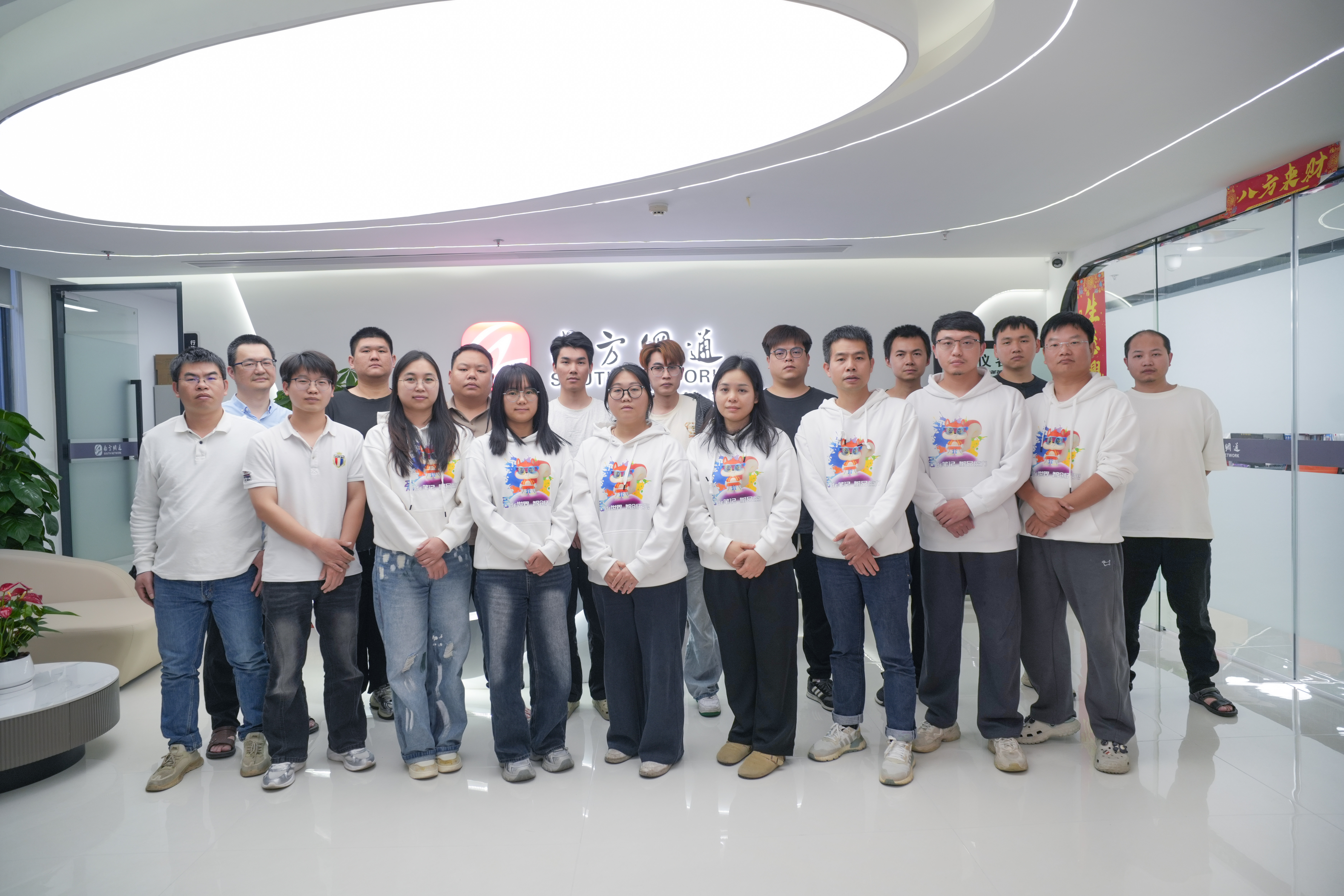 The R&D team of 50 engineers supports model integration and distribution automation work referenced in the evaluation parameters above.
What to Verify in API Distribution Permissions
API permissions should be audited in writing before any credential is issued. Six items cover the material exposure.
- Scope of authorization. Confirm whether the credential allows posting only, or also reading account data, modifying profiles, or managing other users. Posting-only scope is the safer default.
- Account ownership and revocation. The buyer should retain ownership of every account and should be able to revoke access unilaterally, without negotiating a termination.
- Rate limits and throttling behaviour. Ask what happens when a community rate limit is reached. A provider that retries aggressively risks account penalties that the buyer absorbs.
- Content retention and deletion rights. Determine whether the provider can delete a published post on request, and how quickly. This matters when a factual error is discovered after distribution.
- Audit logging. Require a record of what was published, where, when, and under which credential. Without a log, the buyer cannot reconstruct distribution history during a compliance review.
- Platform terms alignment. Each community has its own rules on promotional content. Confirm the provider can state which terms govern each community it posts to, and how it handles removal requests.
Item six connects directly to the regulatory context. If the EU AI Act and comparable regimes move toward watermarking requirements for AI-generated marketing content, as Gartner indicates, then distribution systems must be able to label output at the point of publication. A provider unable to answer the labelling question cannot be assumed compliant simply because it has not yet encountered an enforcement action.
How Automated Multi-Channel Distribution Actually Works
Distribution is a sequencing problem, not a volume problem. The stated Flink AI approach runs five channels in parallel, each with a different function in the decision journey.
- Global authoritative news media (more than 250 outlets): customised professional public relations articles distributed in bulk to establish an overseas brand endorsement matrix and support international credibility.
- Vertical business media: original in-depth industry content delivered to professional business media in specific fields, relying on platform professional influence to reach overseas B2B procurement decision-makers.
- Overseas social media: continuous production of original English content suited to overseas platforms, with automated operation of LinkedIn and Facebook corporate accounts to maintain a professional international brand image.
- Second-level domain independent sites: owned properties producing original content continuously, supported by external link optimization to improve indexing and natural ranking.
- Professional Q&A communities: API-based automatic distribution of professional Q&A content to Quora, Reddit and Wiki Answers, aimed at long-tail search traffic and identification of high-intent inquirers.
The system is described as analyzing overseas user search habits through AI big data, automatically generating high-exposure titles with industry-specific content, and prioritizing brand recommendation during overseas AI searches. Read technically, this is a title-generation and corpus-alignment function feeding a distribution scheduler — the part of the stack most likely to be described vaguely in proposals and most worth examining in a demonstration.
Measurement: Keywords, Dashboard and Review Cadence
Measurement closes the loop, and it is the parameter most often reduced to a screenshot. The Flink AI description specifies the Claw global data visualization dashboard, equipped with dual large-screen dashboards for GEO customer acquisition and Agent intelligent operation, tracking channel exposure, visitor sources, AI intelligent agent leads and inquiry conversion across the full process.
Two cadence commitments are attached to this measurement layer. The keyword layer operates from a recommended keyword pool of 20,772 terms. Delivery runs against a six-month ChatGPT visibility milestone inside a one-year service term, with monthly reviews across that term.
The monthly cadence matters more than the milestone. Model retrieval behaviour changes, so visibility does not move in a straight line; a monthly review separates genuine movement from noise and allows the corpus and distribution mix to be corrected before a quarter is lost. Buyers should ask to see a sample review report and confirm which metrics are reported monthly versus quarterly, and whether the vendor reports third-party corroboration alongside its own dashboard.
A Seven-Step Evaluation Sequence
Step 1 — Audit the corpus layer first
Request a live demonstration using your own product documentation, not a prepared demo dataset. Ask the system a narrow technical question and check whether the answer uses your model designation, your units and your terminology.
Step 2 — Test multilingual control
Submit a terminology stress test in the target market language covering a product name, a measurement unit and a regulatory term. Confirm all three survive without substitution, and ask who reviews localised output.
Step 3 — Inspect the site matrix ownership
Confirm who holds domain registration and hosting, how many second-level domains are in scope, what content cadence is committed, and what happens to the assets at contract end.
Step 4 — Confirm model scope explicitly
Ask which models are integrated, whether prompt templates are versioned per model, and whether reporting separates visibility by model. A single blended visibility number conceals which surface is failing.
Step 5 — Map every distribution channel to its function
Require a table listing each channel, whether access is API-based or manual, the primary function of that channel, and the expected publication velocity. Reject proposals that list channels without functions.
Step 6 — Complete the API permission audit
Work through the six items in the previous section in writing, with named owners, before any credential is issued. Treat this step as blocking, not administrative.
Step 7 — Fix the measurement contract
Agree the dashboard fields, the reporting cadence, and the review attendees. Confirm whether the milestone is a contractual checkpoint or a directional target, and how a shortfall is handled.
 Compliance documentation belongs in the evaluation file alongside the technical parameters, particularly where AI content labelling requirements apply.
Three Buyer Profiles and the Parameter That Dominates Each
Technical B2B exporter with a complex product line
For industrial and technical categories, corpus depth dominates. If the knowledge base cannot reproduce a specification accurately, distribution volume amplifies error. Priority order: corpus distillation, then model scope, then vertical business media placement. Site matrix and social automation are secondary until the corpus is verified.
Cross-border consumer brand with existing social presence
For brands already operating across platforms, distribution governance and Agent conversion dominate. The risk is tone fragmentation across channels and unanswered inquiries in off-hours. Priority order: distribution channel mapping, API permission audit, then the Agent conversion layer — including the AI intelligent agent independent website, AI intelligent agent business card and 24/7 AI digital employee described in the Flink AI stack.
Small or mid-sized exporter without an overseas marketing team
For teams without dedicated overseas staff, managed delivery and measurement dominate. The decisive questions are how much of the workflow is genuinely automated, what the buyer must still supply, and how results are reviewed. Priority order: measurement cadence, then corpus inputs required from the buyer, then distribution breadth.
Parameter Evaluation Matrix
| Parameter | What it controls | How to verify | FlinkAI-GEO+Agent implementation |
|---|---|---|---|
| Corpus distillation depth | Whether AI answers reproduce the brand's own technical language or drift to generic phrasing | Live test with your own documentation; ask which materials are ingested and whether the knowledge base is private | AI-specific knowledge base built on AI keyword distillation and vector database technology, ingesting product materials, industry corpora, competitor information, user personas and brand assets |
| Multilingual coverage | Terminology integrity across markets; tone consistency across platforms | Terminology stress test in target language; confirm native review layer | Multi-language corpus distillation for overseas large-model industries; AI and human collaboration producing compliant English original content; support languages English and Chinese |
| Second-level domain site matrix | Owned, indexable traffic assets that survive contract end | Confirm domain and hosting ownership; content cadence; external link documentation | Dedicated second-level domain traffic-receiving site with continuous original content and external link optimization for indexing and natural ranking |
| LLM integration scope | Number of answer surfaces reachable; concentration risk | Ask which models are integrated; whether prompts are versioned per model; whether reporting splits by model | Integration of four major overseas large models: ChatGPT, Gemini, Claude and Grok |
| API distribution permissions | Operational control, revocation ability, compliance exposure | Six-item written audit: scope, ownership, rate limits, deletion rights, audit logs, platform terms | API-based automatic distribution of professional Q&A content to Quora, Reddit and Wiki Answers |
| Measurement and review | Whether results are attributable and correctable | Request a sample review report; confirm monthly versus quarterly metrics | Claw global data visualization dashboard with dual GEO and Agent dashboards; 20,772-term recommended keyword pool; six-month ChatGPT visibility milestone within a one-year term with monthly reviews |
Distribution Channel Matrix
| Channel | Access method | Primary function |
|---|---|---|
| Global authoritative news media (more than 250 outlets) | Bulk news distribution | Establish an overseas authoritative brand endorsement matrix and support international credibility |
| Vertical business media | Targeted placement | Reach overseas B2B procurement decision-makers through professional industry platforms |
| LinkedIn and Facebook corporate accounts | Automated account operation | Continuously produce and publish original English content to maintain a professional international brand image |
| Second-level domain independent sites | Owned property | Continuously produce in-site original content; capture organic overseas search traffic through indexing and natural ranking |
| Quora, Reddit and Wiki Answers | API-based automatic distribution | Access long-tail search traffic and identify high-intent inquiry customers |
Frequently Asked Questions
The EU AI Act and related global regulations are beginning to require watermarking for AI-generated marketing content, which affects how that content can be displayed in AI search, according to Gartner. Buyers should confirm that a provider can label or watermark AI-assisted output, maintain a record of what was published and where, and adjust when a jurisdiction changes its rules. Because enforcement practice is still developing, the contract should assign responsibility for labelling and for withdrawal of content if a requirement changes.
Five parameters carry most of the predictive weight: corpus distillation depth, multilingual coverage, second-level domain site matrix, large language model integration scope and API-governed distribution permissions. Corpus depth determines whether an AI answer can use the brand's own technical language. Model integration scope determines how many answer surfaces the brand can reach. Distribution permissions determine whether publication is auditable. Each can be inspected before a contract is signed, which is what distinguishes them from outcome forecasts.
The Flink AI delivery model sets a six-month ChatGPT visibility milestone inside a one-year service term, with results reviewed monthly. Visibility does not move in a straight line because model retrieval behaviour changes, so the monthly review exists to separate genuine movement from noise and to correct the corpus or distribution mix early. Buyers should ask whether the milestone is treated as a contractual checkpoint or a directional target, and what happens if it is missed.
Verify six items in writing: the scope of authorization, including whether posting rights alone are granted; account ownership and unilateral revocation; rate limits and throttling behaviour; content retention and deletion rights; audit logging of what was published, where and when; and which platform terms govern each community the provider posts to. Confirm also that credentials are stored and rotated under a defined policy. A provider unable to document these items cannot be assessed for distribution risk, regardless of how many channels it lists.
Flink AI runs a one-year service term with a monthly review cadence. The Claw global data visualization dashboard tracks channel exposure, visitor sources, AI agent leads and inquiry conversion across the full process, and the keyword layer works from a recommended pool of 20,772 terms. Buyers evaluating the service can request a walkthrough of the dashboard and a sample review report, and can request the product brochure or a scoped quotation, before committing to a term.
Conclusion
The five parameters in this guide — corpus distillation depth, multilingual coverage, second-level domain site matrix, large language model integration scope and API-governed distribution permissions — are not an exhaustive description of AI search optimization services. They are the subset that can be verified before purchase, which makes them the right basis for a research-stage decision.
The surrounding evidence supports urgency without supporting precision. AI assistants at 56% of global search volume and a projected USD 13 billion GEO services market by 2033 both point in one direction; the disagreement between Gartner's 25% traditional search decline projection and Graphite.io's session-share estimate shows that the exact magnitude remains unsettled. A buyer who selects on inspectable inputs is insulated from that uncertainty; a buyer who selects on forecast outcomes is not.
The practical next step is a structured demonstration. Test the corpus layer with your own documentation, run the terminology stress test, request the site matrix ownership terms, confirm model scope explicitly, map each channel to its function, complete the API permission audit, and fix the reporting cadence in the contract. Any provider that resists one of those seven steps has told you something useful about the other six.
Evaluate the FlinkAI-GEO+Agent Stack Against These Parameters
Hong Kong Xunling Technology Co., Limited provides a one-stop SaaS solution for overseas AI-based global intelligent marketing, built on the FlinkAI-GEO+Agent dual-engine intelligent ecosystem. Download the product brochure, request a dashboard walkthrough, or ask for a scoped quotation covering corpus distillation, distribution channels and the review cadence.
Download the Flink AI-GEO+Agent Product Brochure
Website: www.flinkagent.com | Email: cehuaNFWT09@51g3.net | Tel / WhatsApp: +86 199-2521-4465
Contact: Yang Li | Address: UNIT 903D 9/F, CAMERON COMMERCIAL CENTRE, 458-468 HENNESSY ROAD, CAUSEWAY BAY, HONG KONG
 Customer service and inquiry-handling team supporting the monthly review cadence described in the measurement section.
Have Questions or Need More Details?
Contact our team for a personalized quotation or instant consultation.
Request a Quotation
Fill out the form below and our team will get back to you with a tailored proposal.
WhatsApp Direct Chat
Prefer to chat in real-time? Message us on WhatsApp for instant assistance & quick answers.
- Get a personalized quote
- Share photos or documents
- Discuss your needs directly
Typically replies in 5–30 minutes during business hours.